
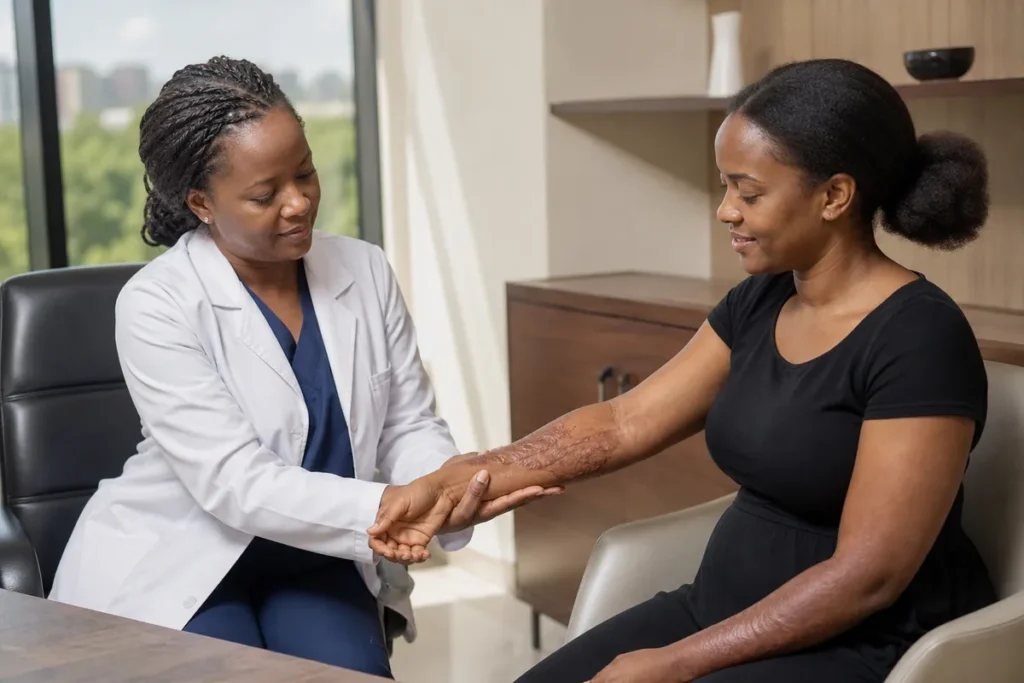
Burns can leave lasting marks on both the body and mind. Many people in Kenya live with burn scars, which may affect appearance, movement, and self-confidence.
For those seeking improvement, plastic surgery for burn scars in Kenya offers solutions tailored to unique needs, helping restore comfort, function, and self-esteem. We believe every journey should begin with honest guidance, expert assessment, and an approach centred on privacy and safety.
Understanding plastic surgery for burn scars in Kenya
Burn scars form when the skin tries to heal after a burn injury. These scars can be raised, tight, discoloured, or even restrict movement if they cross joints or affect muscles.
In Kenya, burns can occur at home, in the workplace, or due to accidents and incidents. Scars from such injuries may cause discomfort as well as social or emotional effects.
Our aim with plastic surgery for burn scars in Kenya is not only to improve appearance but also to restore function, reduce discomfort, and support mental well-being. Every scar is different. Factors such as location, size, depth, patient age, and how the scar impacts daily life shape recommendations for treatment.
Plastic surgery for burn scars in Kenya involves a variety of approaches. We may use surgical techniques, minimally invasive procedures, or sometimes a combination. Our role is to discuss each option clearly, explain risks and expectations, and help you decide if a procedure is right for you.
Approaches to burn scar revision and reconstruction
Not all burn scars require surgery. Some people live quite well with their scars, while others may find them physically or emotionally challenging.
We offer several evidence-based approaches, carefully selected based on individual needs. Here are some common techniques used in plastic surgery for burn scars in Kenya:
Scar revision surgery
Scar revision aims to make scars less visible, flatter, or less restrictive. The method depends on the scar’s size, type, and position. In some cases, this may involve cutting out the scar and carefully closing the area with stitches so the new scar is smaller and better aligned with natural skin folds.
Z-plasty and local tissue rearrangement
Techniques like Z-plasty help release tight, contracture scars that limit movement, especially near joints. Z-plasty changes the direction of the scar and redistributes tension, helping improve skin flexibility and function. In other situations, we may use local flaps, moving healthy, nearby skin over a scarred area for better coverage and appearance.
Skin grafting
Skin grafting is recommended when burns have removed large areas of skin or when a deeper scar needs improved coverage. We take healthy skin from another part of the body, called the donor site, and carefully place it over the treated area.
Over time, the graft blends in, improving protection and mobility. This can be an effective part of plastic surgery for burn scars in Kenya when local tissue repair is not possible.
Minimally invasive aesthetic treatments
Some scars respond well to treatments such as surgical fat transfer, which can soften and flatten raised scars. In select cases, we use precise scar injections or other minor procedures to improve appearance and comfort. We always explain the limitations, benefits, and alternatives, making sure each patient understands which techniques may help their situation.
Combining techniques
Often, more than one approach is combined for the best result. For example, a contracture scar limiting movement may be released with a Z-plasty, then areas of skin loss covered using grafting. We carefully plan every detail with safety and patient goals in mind.
What to expect from plastic surgery for burn scars in Kenya

Considering plastic surgery for burn scars in Kenya is a significant decision, and we believe informed preparation is key. Every step from the first consultation to follow-up support is designed to ensure clear communication, comfort, and safety.
The initial consultation
Our standard is that every treatment begins with a detailed consultation. We take time to understand your main concerns: Is the scar affecting movement, sensation, comfort, or is appearance the main worry? We ask about your general health, previous injuries or surgeries, and personal goals.
During this discussion, we closely examine the scar, assessing its type, size, location, and how it affects your body. This allows us to offer realistic advice on which treatments may help, and whether surgical or non-surgical options are likely to meet your expectations. Patient safety always comes first, so we thoroughly consider any medical conditions, allergies, or other factors that might affect your recovery.
Setting realistic expectations
Plastic surgery for burn scars in Kenya can dramatically improve quality of life, but it is important to understand what surgery can and cannot achieve. No treatment can erase a scar completely, but we can often make significant improvements in appearance, movement, and comfort.
We talk openly about likely outcomes, possible risks, and the number of stages needed. In some cases, a series of procedures over time may be required for the best result. We discuss all risks, such as infection, bleeding, changes in skin colour, or sensitivities, so you can make a fully informed decision.
Preparing for surgery
Before proceeding with plastic surgery for burn scars in Kenya, we guide patients through preparation. This may involve blood tests, reviewing current medications, and sometimes lifestyle modifications such as stopping smoking, which improves healing.
We provide detailed, written instructions on what to do before and after treatment, ensuring you feel confident about each step. If you are visiting us from outside Nairobi or another part of Kenya, we can help with guidance on travel, scheduling, and what to expect during your stay.
The surgery process
Most burn scar revision procedures are performed under local or general anaesthesia. The duration and complexity depend on the chosen technique and the individual’s health profile. In some cases, the procedure is carried out as a day case, while others may need an overnight stay.
We carefully explain what the operation involves, how long it takes, and what you need to know for your comfort and safety. Our operating environment is designed to prioritise privacy and hygiene, in line with best practices and national regulations.
Recovery after plastic surgery for burn scars in Kenya
Recovery depends on the type and extent of the procedure. Simple scar revisions may heal within a week or two, while larger grafts or more complex reconstructions may require several weeks for recovery. We outline the expected timeline and provide clear aftercare instructions, such as wound care, activity restrictions, and follow-up appointment schedules.
Pain management is important. We discuss medication options and practical tips for minimising discomfort and swelling. We are committed to monitoring healing and step in promptly if any concerns arise.
Long-term, scars mature and change for up to a year. Sometimes, additional tweaks or non-surgical treatments are offered to optimise the final result. We provide detailed follow-up support, encouraging questions and remaining available throughout your journey.
Our consultation process and patient support
Our approach to plastic surgery for burn scars in Kenya centres on personalised, honest care. Every patient’s journey is unique, and we believe the best outcomes come from partnership, planning, and trust.
Individual assessment
We see every consultation as a collaboration. We listen to your story, your hopes and concerns, and your goals for treatment. Our surgeons and team explain how each option applies to your case, using clear language and visual aids when needed.
We prioritise privacy throughout, conducting consultations in a confidential setting with respect for your dignity and comfort. Whether you are seeking surgical intervention, minimally invasive solutions, or simply advice about your options, we tailor our guidance to your needs.
Careful planning and communication
Patient safety is our foundation. Before recommending plastic surgery for burn scars in Kenya, we consider your health, history, lifestyle, and circumstances.
We explain every option as well as possible consequences and alternatives. We do not push treatments but empower patients to make informed, confident decisions.
We maintain honest communication at every stage: from explaining risks and realistic outcomes to clarifying costs and expected timelines. We carefully plan procedures to fit your schedule, responsibilities, and care needs.
Support for local and out-of-town patients
We recognise that not everyone seeking plastic surgery for burn scars in Kenya lives in Nairobi. We guide out-of-town patients through the process, supporting travel planning, accommodation, and discharge arrangements. We can often collaborate with your local healthcare providers for aftercare if travel back to Nairobi is difficult.
Ongoing aftercare
Proper follow-up is crucial to healing and long-term success. We organise regular post-treatment checkups, answer your questions, and remain available by phone or email whenever you need advice. Our aftercare team assists with wound care, medication questions, and emotional support as your scars heal and your confidence grows.
We aim for a supportive environment anchored in respect, privacy, and evidence-based care. Whatever your age, background, or reason for seeking help, we are committed to walking the journey with you.
If you would like to learn more about burn scars and their management, the NHS overview on scars offers a helpful introduction.
Anyone whose burn scars cause discomfort, restrict movement, or create emotional challenges may consider plastic surgery for burn scars in Kenya. An individual consultation helps assess suitability.
Plastic surgery for burn scars in Kenya aims to improve the appearance, function, and comfort of scars but cannot remove them entirely. We set realistic expectations during consultation.
All procedures have risks, such as infection, delayed healing, or changes in skin colour. We discuss these risks in detail and explain how our approach focuses on safety and prevention.
Recovery varies depending on the type of procedure performed. Simple revisions may take a few weeks, while larger surgeries can require a longer period of healing and follow-up support.
Aftercare is a crucial part of our service. We provide clear instructions, scheduled follow-ups, and ongoing support tailored to each patient’s needs, whether local or out-of-town.