

Areola reduction surgery in Kenya offers patients the opportunity to adjust the size or shape of the areola, the pigmented area around the nipple, when it is a cause of self-consciousness or discomfort. At AJ Plastic Surgery Centre, we guide each patient from their earliest questions through individual consultation, planning, and attentive follow-up. For anyone in Nairobi or across Kenya considering areola reduction surgery, our priority is safety, privacy, and honest assessment from the outset.
Areola reduction surgery in Kenya – what you should know
Areola reduction surgery in Kenya is a specialist procedure designed to alter the diameter or shape of the areola for cosmetic or reconstructive reasons. Many individuals, both women and men, seek this surgery to address naturally large areolas, stretched areolas after breastfeeding, or changes caused by weight fluctuation or previous breast procedures.
We often see patients who feel self-conscious changing at the gym, going swimming at Kasarani Aquatic Stadium, or during intimate moments. Some want to restore the appearance of their breasts after dramatic weight loss, pregnancy, or reconstructive surgery after trauma.
Others are simply born with larger areolas that do not feel proportionate to their chest size. For some Kenyan women, cultural and personal standards influence their comfort or desire for change.
Areola reduction is a focused surgical procedure, but it can also be performed alongside breast lift, breast reduction, or breast augmentation for a more comprehensive outcome. The suitability and scope of surgery, however, require detailed professional assessment. During our initial consultation, we discuss your specific reasons and expectations, review your medical history, and explain all possible options and risks.
In every case, patient safety and privacy are vital to us. We have discreet consultation spaces in our Nairobi location and strict protocols to keep your information confidential, whether you travel from Westlands, Kilimani, Mombasa, or further afield.
Most importantly, we emphasise realistic outcomes and individual planning. Some people seek subtle changes of a few millimetres; others have more significant reshaping in mind. Our surgeons carefully explain what can be achieved and help you understand how changes in areola size may affect nipple sensation or overall breast shape, as well as how scars may appear over time.
Understanding the areola reduction and nipple correction process
The initial consultation: Our approach
Every areola reduction surgery in Kenya begins with a thorough consultation at our Nairobi clinic. Consultations usually last 40–60 minutes. We encourage questions and provide detailed answers about expectations, risks, recovery timelines, and alternative approaches.
We start by discussing your concerns and what you hope to achieve. For instance, you might want to have the diameter of your areola reduced from 5 cm to 3.8 cm, or you may wish to address both the areola and nipple size together. We examine the breast area, take photographs for pre-operative records (with your consent), and discuss relevant medical history, family history, medications, allergies, and prior surgeries.
Some patients arrive after researching options privately, while others have heard about areola reduction surgery in Kenya from friends or through referral by their gynaecologist or general practitioner. Occasionally, out-of-town patients arrange a pre-consultation call with us to clarify logistics or the duration of post-operative stay. We strive to provide clear, evidence-based guidance, referencing standards by professional bodies like the British Association of Plastic, Reconstructive and Aesthetic Surgeons (BAPRAS).
Our surgeons always take time to outline all available treatments, including non-surgical approaches if appropriate, explain pros and cons, and detail what follow-up care will involve. Before we recommend surgery, we make sure all your questions are answered and realistic expectations are set.
The surgical procedure: Step-by-step
Areola reduction surgery in Kenya is generally performed as a day-case procedure under local anaesthesia, sometimes combined with sedation. For some patients, general anaesthesia may be recommended, especially when combined with breast lift or reduction.
Here is how a typical procedure unfolds at our Nairobi centre:
- Marking and measurement: Before surgery, we carefully mark the new areola borders, typically using areola templates to achieve symmetry. Most patients opt for an areola diameter between 3.8 and 4.5 cm, but this varies according to chest and breast size.
- Anaesthesia: Local anaesthetic is administered to numb the area and keep you comfortable throughout.
- Tissue adjustment: Our surgeon creates a circular incision around the existing areola, removes a ring of excess pigmented skin, and preserves the central nipple and areola tissue.
- Repositioning and closure: The outer skin is carefully closed around the new, smaller areola, often with dissolving stitches. We may use deep tissue sutures for added support, which can help reduce tension on the wound and minimise scar widening over time.
If nipple size adjustment is also required, this can be done during the same session. For those combining areola reduction with breast lift or augmentation, we plan incisions to minimise scarring and enhance overall shape.
The overall procedure typically takes one to one and a half hours. After the procedure, patients rest in our private recovery room for a short period until they are ready to return home.
After surgery: Recovery, scar care, and follow-up
Most people go home the same day, accompanied by a friend or relative. We provide written instructions customised to your procedure and situation; these cover wound care, activity restrictions, medications (such as antibiotics or pain relief), scar management, and red-flag symptoms to watch for.
You will typically wear a soft, supportive bra (no underwires) for at least a week, possibly longer. We advise avoiding strenuous chest activity, heavy gym sessions, vigorous swimming at venues like Impala Club, or carrying heavy loads for at least two weeks.
Mild bruising and swelling are common in the first few days. Temporary changes in nipple sensitivity may occur but usually settle within weeks to months.
Stitches are generally dissolving, but we schedule in-person or virtual reviews at 5–7 days, and again at 3–4 weeks, to check healing. Many of our patients from outside Nairobi choose to stay one night nearby, even a basic hotel in Upper Hill or Kilimani suffices for convenience, before returning home.
Most scars settle to a fine line at the border of the new areola. We provide practical guidance on avoiding sun exposure, applying silicone gels or tapes, and recognising normal healing from problems. Our follow-up continues until you are satisfied with the healed result.
Frequently asked questions about areola and nipple surgery in Nairobi
Q: How much does areola reduction surgery in Kenya cost?
The cost for areola reduction surgery in Kenya usually ranges from KES 90,000 to KES 180,000 when performed as a stand-alone procedure. Final costs depend on whether the surgery is combined with other treatments such as a breast lift or nipple size reduction, the use of general vs. local anaesthesia, and any specific requirements for post-operative care. During our consultation, we always provide a clear, detailed written quotation with no hidden charges.
Q: What risks or complications should I be aware of?
Areola reduction surgery in Kenya is generally safe when performed by a specialist, but all surgery carries some risk. Potential complications include infection, temporary or permanent changes in nipple sensation, asymmetry, delayed healing, and (rarely) excess scarring or areola widening over time. We discuss every risk frankly, outline how we minimise them, and provide you with clear aftercare instructions and responsive follow-up support.
Q: What recovery time should I expect?
Most patients return to desk work within 2–3 days. Mild swelling or bruising fades within one to two weeks.
Full exercise and heavy lifting are usually safe by four weeks. We see you for follow-up to monitor your healing progress and answer ongoing questions.
Q: Can areola reduction be performed with other breast procedures?
Yes, many patients combine areola reduction surgery in Kenya with breast lift, augmentation, or reduction. Combining procedures is often practical, as it means a single recovery period and incisions can be planned to minimise scarring. We help you decide the safest and most effective plan during your consultation.
Q: Are there non-surgical alternatives for reducing areola size?
At present, no non-surgical treatments reliably shrink an enlarged areola. Creams, lasers, or devices marketed for this purpose have not demonstrated lasting results. Surgical adjustment remains the most effective and proven approach, and we do not recommend non-surgical methods for this indication.
Combining areola reduction with other treatments
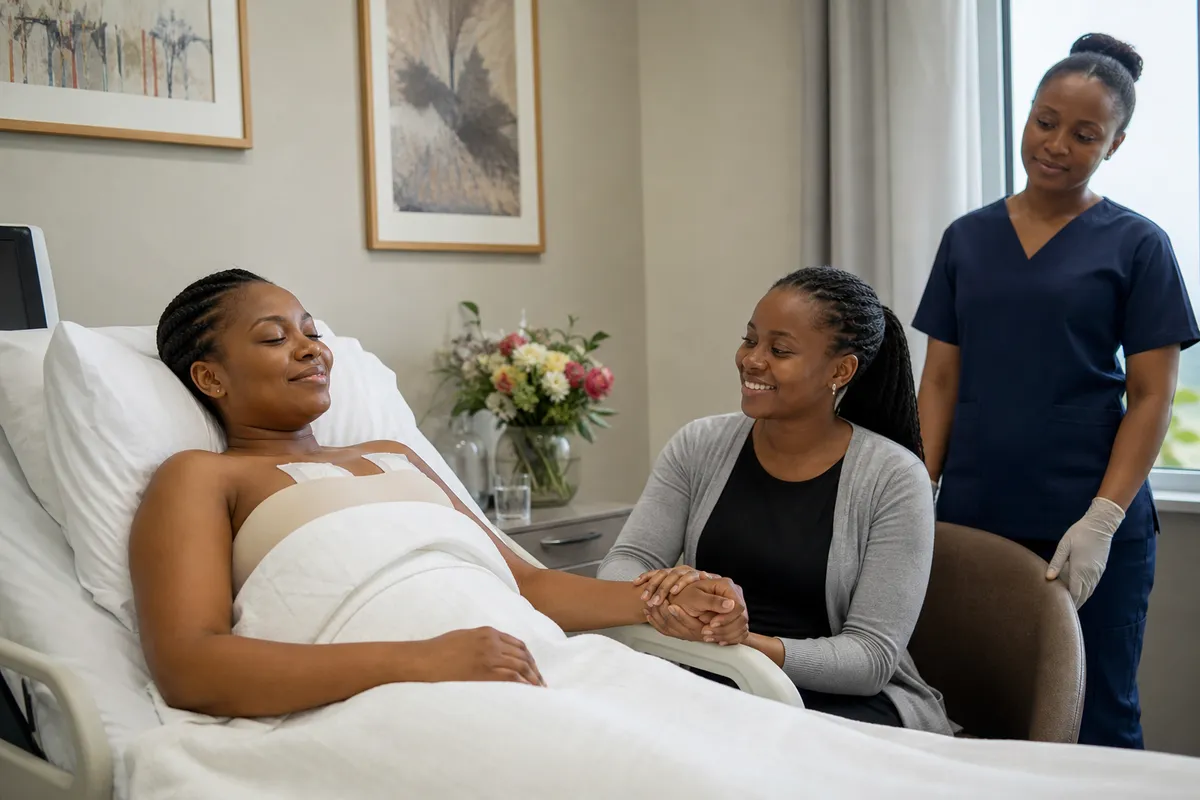
It is common for us to plan areola reduction surgery in Kenya as part of a more extensive breast procedure. For example, a woman seeking a “mommy makeover” after pregnancies may combine areola reduction with breast lift and tummy tuck. Men seeking correction for gynecomastia may also require areola reshaping after gland removal or significant weight loss.
We always individualise the surgical plan. For instance, when combining areola reduction with breast augmentation using implants, we pay close attention to the final position and proportions of the areola in relation to breast contours.
For patients previously treated elsewhere or needing revision, such as after scarring, previous breast reduction, or changes from hormonal therapy, we offer revision options tailored to your needs. We assess each case carefully, sometimes requesting additional imaging or contacting your prior provider (with consent) for records to ensure we have all relevant details before planning revision surgery.
How we prioritise safety, privacy, and honest communication
Our experience with areola reduction surgery in Kenya has shown that privacy, trust, and forthright advice are as important as surgical skill. We use private waiting areas and consultation spaces, strict data protocols, and secure communication channels. When discussing sensitive concerns, such as dissatisfaction after previous surgery or genetic differences affecting breast or nipple shape, we ensure patients feel heard and supported.
Safety is always at the forefront. We assess each patient for factors that may increase surgical risk, such as smoking, blood clotting issues, medications like anticoagulants, or underlying health problems. We provide clear information about how to prepare for surgery, when to stop certain medicines, and when to contact us with concerns.
Our follow-up support is ongoing. Whether you live in Nairobi or travel from Nakuru, Kisumu, or beyond, we provide direct contacts for urgent questions, offer telemedicine follow-up where appropriate, and coordinate care with your local doctor if needed. Our goal is that you always feel informed and cared for, not only before surgery but throughout recovery.
Ready to ask more? Book your consultation
Areola reduction surgery in Kenya is a deeply personal choice, often motivated by a desire for greater confidence and comfort. We believe that providing clear information, tailored recommendations, and ongoing support helps every patient feel empowered.
If you are considering this procedure, we invite you to book a consultation with our team. We are here to discuss your goals, answer every question, and help you decide what is right for you, always with your safety, privacy, and well-being as our highest priorities.
The cost for areola reduction surgery in Kenya usually ranges from KES 90,000 to KES 180,000 when performed as a stand-alone procedure. Final costs depend on whether the surgery is combined with other treatments such as a breast lift or nipple size reduction, the use of general vs. local anaesthesia, and any specific requirements for post-operative care. During our consultation, we always provide a clear, detailed written quotation with no hidden charges.
Areola reduction surgery in Kenya is generally safe when performed by a specialist, but all surgery carries some risk. Potential complications include infection, temporary or permanent changes in nipple sensation, asymmetry, delayed healing, and (rarely) excess scarring or areola widening over time. We discuss every risk frankly, outline how we minimise them, and provide you with clear aftercare instructions and responsive follow-up support.
Most patients return to desk work within 2–3 days. Mild swelling or bruising fades within one to two weeks. Full exercise and heavy lifting are usually safe by four weeks. We see you for follow-up to monitor your healing progress and answer ongoing questions.
Yes, many patients combine areola reduction surgery in Kenya with breast lift, augmentation, or reduction. Combining procedures is often practical, as it means a single recovery period and incisions can be planned to minimise scarring. We help you decide the safest and most effective plan during your consultation.
At present, no non-surgical treatments reliably shrink an enlarged areola. Creams, lasers, or devices marketed for this purpose have not demonstrated lasting results. Surgical adjustment remains the most effective and proven approach, and we do not recommend non-surgical methods for this indication.