
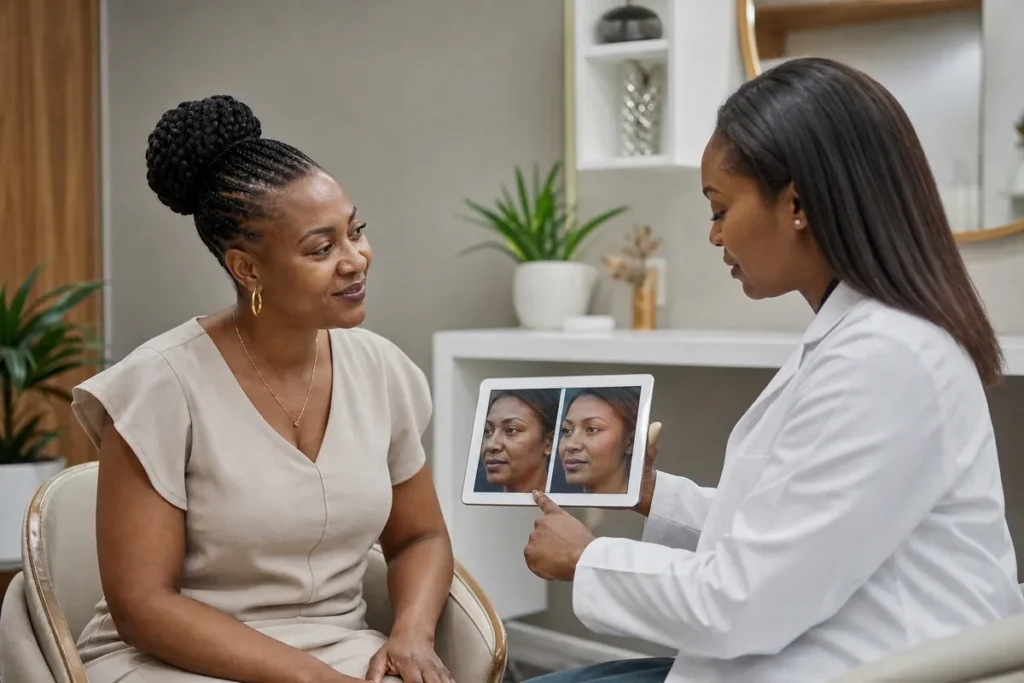
Facial rejuvenation treatments are evolving rapidly, with more people in Kenya seeking natural-looking, personalised solutions. For many, synthetic fillers are no longer the preferred option. Instead, face fat transfer in Kenya is growing in popularity as a technique that restores lost volume using a patient’s own fat, leading to subtle, authentic results.
At AJ Plastic Surgery Centre, our experience with facial fat grafting and natural face augmentation allows us to offer a highly individual approach to this procedure. We prioritise safety, privacy, and honest communication throughout the journey, always starting with a thorough consultation to ensure each patient can make an informed and confident decision.
What to expect from face fat transfer in Kenya
A face fat transfer procedure in Kenya is a minimally invasive surgical technique designed to restore youthful contours and volume to areas of the face that have lost fullness due to ageing, weight loss, or other factors. The process uses purified fat collected from another part of your body, often the abdomen or thighs. This fat is then carefully injected into targeted facial areas.
The goal of undergoing this treatment is to create a natural, refreshed appearance rather than an exaggerated or artificial look. Many of our patients seek a face fat transfer when age-related changes such as sunken cheeks, deep lines, or a loss of facial fullness begin to concern them. Others may require correction of minor facial asymmetry or soft tissue damage after injury or illness.
Compared to traditional synthetic fillers, a face fat transfer offers the unique benefit of using your own tissue, which reduces the risk of allergic reactions. Additionally, the results can be longer-lasting, with a portion of the transferred fat becoming a permanent part of the facial structure once it establishes a blood supply.
How facial fat grafting works for natural face augmentation
Understanding the process behind facial fat grafting in Kenya can help you feel more confident about your options. The procedure typically involves three distinct stages: harvesting, purification, and injection.
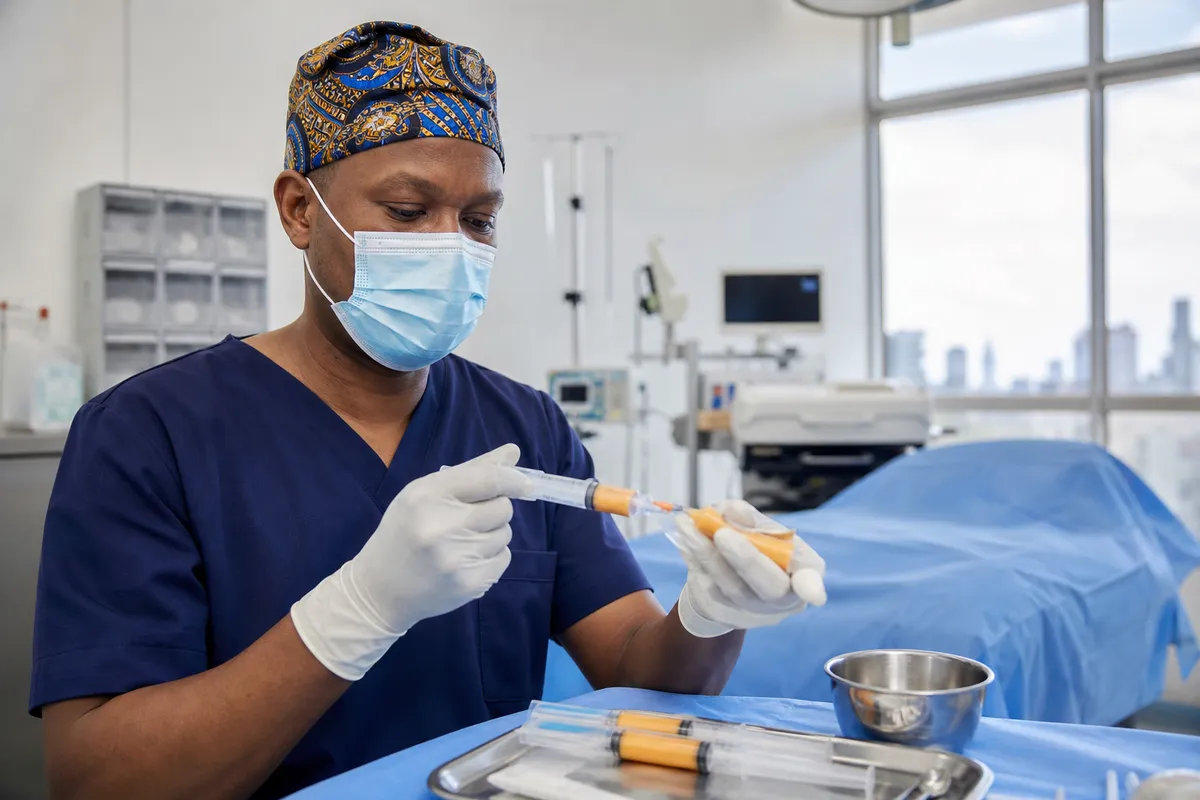
First, a suitable area of your body is selected, such as the lower abdomen, flanks, or inner thighs, with sufficient fat for harvesting. A small amount of this fat is gently removed using a fine cannula and a specialised liposuction technique. This step is performed with great care to maintain the highest possible quality and viability of the fat cells.
Next, the harvested fat undergoes a purification process. Healthy, undamaged fat cells are separated from oil, blood, and other fluids. Only the best-quality fat is used for reinjection, increasing the chance of successful graft take and long-lasting results.
In the final stage, small volumes of purified fat are meticulously injected into the predetermined areas of your face. These areas may include the cheeks, under-eye hollows, nasolabial folds, jawline, or temples, based on your personal anatomy and the goals identified during your consultation.
The entire process is highly individualised. We aim to layer the fat carefully in multiple planes to achieve smooth, natural-looking contours and avoid overfilling. Because we use your own tissue, the result feels and looks like your own face, just more refreshed.
The outcome generally includes softer facial contours, reduction in deep lines, and improved overall facial harmony. Initial swelling is expected, but as this settles, the real benefits begin to show: a rejuvenated appearance that is both subtle and enduring.
Is facial fat transfer right for you? Consultation and safety considerations
Choosing a face fat transfer is a decision that should be made with clarity, accurate expectations, and the support of experienced professionals. This is why every journey with us at AJ Plastic Surgery Centre always begins with a comprehensive consultation.
During your consultation, we discuss your aesthetic concerns, medical history, and expectations for facial enhancement. A careful examination of your facial shape, soft tissue quality, and skin elasticity helps us determine whether the procedure is likely to deliver the results you seek. We assess the availability of suitable donor fat and ensure no medical conditions would increase risks.
Safety is our first priority. Undergoing a face fat transfer is considered a safe technique when performed by trained surgeons, but as with all procedures, there are potential risks.
These may include infection, bruising, irregularity of the skin surface, asymmetry, or partial loss of injected fat due to lack of blood supply. We carefully explain all risks, potential benefits, and alternatives before you make any decision.
One of the reasons many people prefer this treatment to synthetic fillers is durability. While some of the transferred fat may be reabsorbed in the early weeks, the remainder has the potential to become a long-lasting part of your facial volume. Touch-up sessions can be planned if needed, but with a well-planned, careful approach, most patients are pleased with the initial result.
Our support does not end after the procedure. We provide detailed aftercare instructions, schedule follow-up appointments, and offer guidance for both local and out-of-town patients throughout the recovery period. Privacy and confidentiality are always maintained at every stage.
Face fat transfer in Kenya: Patient journey and planning
Understanding what to expect at each stage can help you approach a face fat transfer procedure with confidence. Our process is designed to be thorough, supportive, and tailored to your individual needs.
At your initial assessment, we listen to your concerns and goals. We use our expertise in facial anatomy and aesthetics to guide the conversation, offering honest feedback on what a face fat transfer can achieve for your unique features.
Next, a tailored treatment plan is developed. We identify the ideal donor site on your body for fat harvesting and map the most effective areas for reinjection. Should you have other aims, such as combining facial fat grafting with procedures like a facelift, lip lift, or minimally invasive aesthetic treatments, we discuss these as part of your comprehensive treatment plan.
On the day of the procedure, local or general anaesthesia may be used, depending on the extent of fat collection and injection. Most patients return home the same day, though rest is essential for a swift recovery. Mild swelling and bruising usually subside within 1–2 weeks, with final results becoming increasingly evident in the following months as the transferred fat settles and integrates.
We recommend avoiding strenuous exercise and direct facial pressure in the initial period after your procedure. Our support team remains available to answer any questions and guide you through the recovery process.
Comparing face fat transfer in Kenya to injectable fillers

Many people considering facial rejuvenation in Kenya find themselves choosing between synthetic fillers and a face fat transfer. While both options restore lost volume, there are important differences.
With fillers, such as hyaluronic acid products, the effect is immediate but temporary. Results last several months, and repeat treatments are needed to maintain the look.
By contrast, a face fat transfer can yield results that endure for years, thanks to the use of your own living tissue. Some degree of fat resorption is natural, but the remaining grafted fat survives permanently.
Additionally, many patients prefer facial fat grafting because it avoids the introduction of foreign substances into the body. This can be especially reassuring for those with a history of allergies or who value entirely natural solutions for their appearance.
It is important to note, however, that a face fat transfer is a more involved process, requiring surgical skill and experience for best results. The outcome depends on careful planning, gentle technique, and appropriate patient selection, all of which are central to our approach.
Who benefits most from face fat transfer in Kenya?
Ideal candidates for this procedure are individuals seeking to restore soft facial volume, smooth deep lines, or correct mild asymmetries using their own fat. The procedure is most rewarding for those with:
- Facial volume loss due to ageing, genetics, or major weight loss
- Hollow cheeks or temples
- Deep nasolabial folds (lines from the nose to the mouth)
- Tear trough deformities or sunken under-eye areas
- Minor facial scars or contour deficiencies needing soft tissue filling
Good overall health and realistic expectations are key for a successful outcome. Our in-depth consultations are designed to identify any factors that could affect your results, including skin quality, facial structure, and previous treatments.
Individuals with insufficient donor fat or certain medical conditions may not be suitable candidates for a face fat transfer. For these patients, alternative treatments can be explored in a safe and honest discussion.
Long-term results and aftercare for face fat transfer in Kenya
The success of this facial rejuvenation technique relies not only on surgical skill, but on how well the transferred fat cells establish a blood supply and integrate with surrounding tissue. This integration process can take several weeks to months.
Most patients notice early improvements in facial fullness and contour within the first month. As swelling subsides and the fat settles, the face appears more balanced, with a soft, youthful quality that feels natural to the touch.
Long-lasting results are the norm, especially with appropriate patient selection and technique. However, some resorption of fat is expected. We offer follow-up support and, if required, discussion about minor touch-up procedures for the rare cases where additional volume may be needed.
Aftercare instructions are simple but important. We recommend gentle skincare, avoiding pressure on treated areas, and adherence to any instructions regarding activity and medication. Our team remains available for support at every stage.
The results of face fat transfer in Kenya can be long-lasting, as the surviving fat cells become a permanent part of your facial volume, though some fat may be naturally reabsorbed.
Most people experience some swelling and bruising for 1–2 weeks after face fat transfer in Kenya, with most returning to normal activities soon after and full results evident in several months.
Yes. Face fat transfer in Kenya can be performed alone or alongside other facial procedures, such as a facelift or lip lift, for a more complete rejuvenation.
Face fat transfer in Kenya is suitable for a wide range of skin types, but detailed assessment during consultation ensures the safest and most appropriate plan.
You can find additional information about fat transfer procedures from reputable resources such as Wikipedia’s article on fat grafting.