
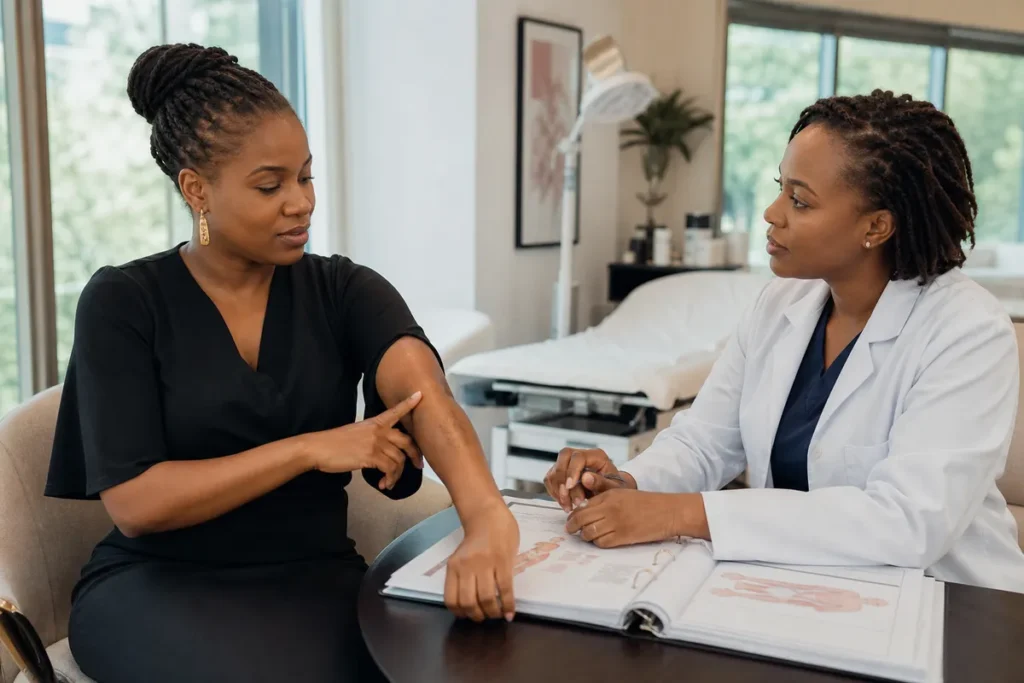
Scars can carry physical reminders of injury, surgery, or past medical conditions. Many people in Kenya, and specifically in Nairobi, seek effective ways to address visible or uncomfortable scars that affect confidence and comfort.
At AJ Plastic Surgery Centre, we understand that seeking medical advice for scars is deeply personal. Plastic surgery for scars in Kenya is a specialist area where careful consultation, realistic expectations, and safety must always come first.
Our aim is to guide you through the options available for surgical scar improvement, highlighting the steps, benefits, and honest realities of these treatments. We want every patient to feel supported, informed, and empowered in planning their care, knowing that tailored advice and follow-up will be provided at every stage.
Understanding plastic surgery for scars in Kenya
Plastic surgery for scars in Kenya involves a range of specialist procedures designed to reduce the appearance of scars, improve skin contour, or restore comfort and function. Scarring can arise from injuries, burns, surgical operations, infections, or medical conditions such as acne or keloids. Every scar is unique, and so is every patient’s skin and healing process.
Our approach begins with an individual consultation. This first step is essential: it allows us to assess the scar in detail, discuss your goals, and explain which methods might offer realistic improvement. Not every scar is suited for surgical revision, but there are effective options for many types,:
- Surgical scars that remain thick, raised, sunken, or coloured long after healing
- Traumatic injury scars or burns causing tightness or restriction of movement
- Disfiguring acne scars or chickenpox scars on the face or body
- Stretch marks or atrophic scars distorting skin contour
- Keloid or hypertrophic scars that have grown beyond their original area
Each type requires a different approach. While some scars benefit from surgical excision or re-closure, others respond well to techniques such as tissue rearrangement, Z-plasty, or fat transfer. For scars that do not need surgical intervention, we may advise minimally invasive aesthetic treatments if appropriate.
We always assess several factors before recommending any treatment. These include your age, general health, skin type, previous treatments, and expectations. The location, age, and severity of the scar are also crucial in deciding whether plastic surgery for scars in Kenya is right for you.
Evidence shows that careful assessment and patient understanding significantly influence the success of scar revision procedures. Our team considers local factors, such as skin tone variation, individual healing response, and sun exposure, all of which can affect scar appearance and healing in Kenyan patients. We stay updated with current medical standards in scar management, in line with NHS scar revision guidance, to ensure our approach remains evidence-based and safe.
What to expect from surgical scar improvement
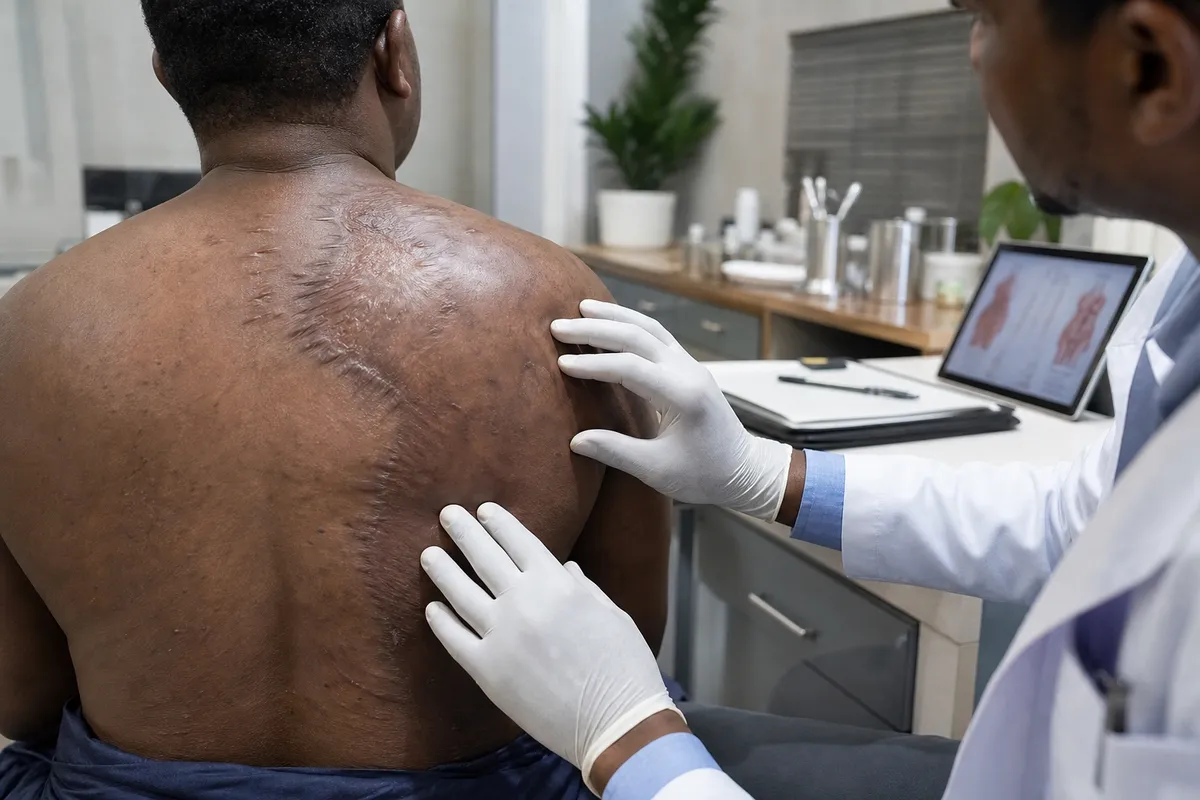
If we agree together that you are suitable for surgical scar revision, we plan every step with your safety and understanding as our top priorities. Here’s what the treatment journey usually involves at our centre:
Initial consultation and personal assessment
During your first meeting with us, we discuss your health history, assess the scar’s type and location, and listen to your specific concerns. We explain which options exist for plastic surgery for scars in Kenya and help you set realistic expectations about what surgery can and cannot achieve.
We talk you through possible non-surgical alternatives if these are more suitable. We also assess whether you are in good general health and whether any underlying conditions (such as diabetes, keloid tendency, or use of certain medicines) might affect the procedure or healing time.
Planning your surgery
Once you have had time to consider your options and decide to proceed, we provide clear information about the proposed procedure,:
- The surgical method recommended (for example, scar excision, Z-plasty, W-plasty, skin grafting, fat transfer, or tissue rearrangement)
- The expected healing process, timescales, and follow-up schedule
- Guidance on what will change, and what may remain, after the procedure
- Discussion of possible risks, such as bleeding, infection, numbness, pigment changes, or recurrence of the scar
- Information on local anaesthesia, sedation, or general anaesthesia (depending on the procedure)
- Support for local and out-of-town patients in arranging logistics, aftercare, and communication
Throughout, we encourage honest two-way communication. We answer questions, address concerns, and clarify any uncertainties about outcomes or future appearance.
The surgical procedure
Scar revision operations are performed in a clean, private, and safe medical environment. The specific procedure varies depending on the scar’s characteristics, but common techniques used in plastic surgery for scars in Kenya include:
- Scar excision and re-closure: Removing the old scar and rejoining the skin in a careful, layered way to create a finer, less conspicuous line.
- Z-plasty or W-plasty: Rearranging small flaps of skin to break up tight or straight scars, making them less visible and improving movement.
- Fat transfer: Using your body’s own fat (harvested from another area) to fill sunken scars, restore contour, and improve skin quality.
- Skin grafting: Moving a thin piece of healthy skin from another location to cover a wider, often traumatic or burn-related, scar.
For suitable patients, we may consider minimally invasive treatments to help refine the result, such as scar massage, prescription creams, or non-surgical skin resurfacing in certain cases. Every treatment is discussed in detail so you know what to expect.
Recovery and aftercare
After surgery, we give you step-by-step instructions for wound care, pain control, and activity restrictions. Regular follow-up is a core part of our service: we check healing progress, identify any concerns early, and offer ongoing guidance until full recovery.
Most patients experience some redness, swelling, or minor discomfort for several days to weeks after plastic surgery for scars in Kenya. Full results often become clear gradually as swelling resolves and the scar matures, which can take several months.
We advocate for sun protection, healthy eating, and gentle skin care during healing to maximise outcomes. If you have concerns or experience any unexpected symptoms, we are always on hand for advice or review.
Expected results vary: while surgical revision can often create a less obvious and more regular scar, no procedure can erase a scar completely. Our priority is helping you achieve natural-looking improvement, with the highest possible confidence and comfort.
Is scar removal surgery in Nairobi right for you?
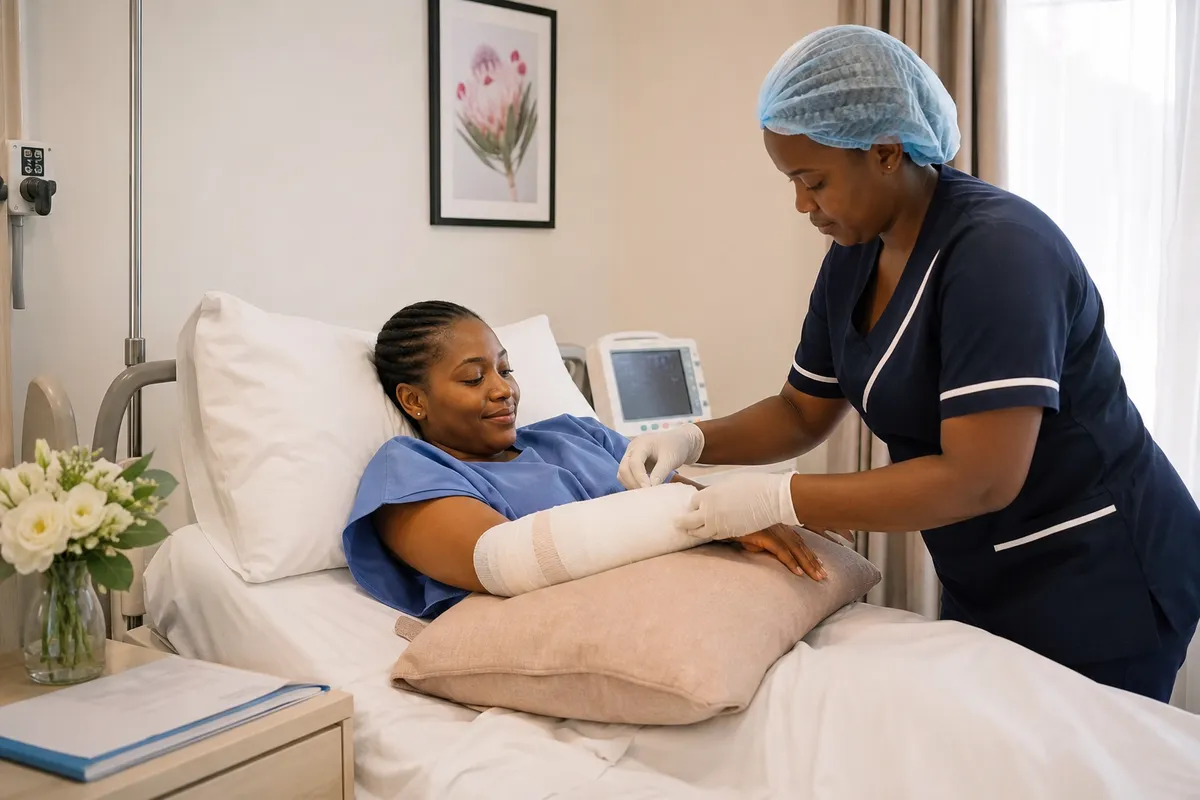
Deciding whether to pursue plastic surgery for scars in Kenya is a personal choice. We believe that the best results happen when patients have realistic expectations and receive clear, individualised information from the outset.
Suitability for scar revision surgery
You may be a suitable candidate if:
- Your scar causes emotional distress, discomfort, or restricts movement
- The scar is mature (usually at least 6–12 months old)
- You are in good general health and do not have untreated medical conditions affecting healing
- You have realistic expectations about what can be achieved
We always advise that certain types of scars, such as old, wide, or tight post-surgical scars, keloids, or burns, may benefit more from plastic surgery for scars in Kenya. However, highly active, fresh, or infected scars are generally not treated surgically until they have matured and stabilised.
Our surgeons take time to explain when scar improvement makes sense and when to wait or try other options. Sometimes, simple measures such as topical creams, silicone gel sheeting, or non-surgical treatments are more appropriate, especially for younger scars.
The importance of consultation and honest advice
Every patient is unique. Our consultation-driven approach ensures that your individual case, preferences, and questions form the basis for any recommendations.
We never promise a “scar-free” result. Instead, we provide honest, evidence-based guidance about the likely outcome, risks, and alternatives for plastic surgery for scars in Kenya. We always prioritise safety, your privacy, and clear communication throughout your journey.
We also offer support to local and out-of-town Kenyan patients who require guidance on logistics, recovery arrangements, or additional treatments as part of their care. Our goal is to be your trusted source for scar improvement advice, with open follow-up and attentive communication at every stage.
Aftercare and support for life after scar surgery
After scar revision, we continue to monitor your recovery and are available for additional advice, reassurance, or further treatments if needed. We address all your questions and concerns, providing a caring and responsive aftercare service long after your initial procedure.
Our experience shows that patients appreciate straightforward guidance, practical advice, and realistic encouragement at each step. We strive to make your experience of plastic surgery for scars in Kenya positive, safe, and fully supported.
A good candidate is generally someone with a mature scar causing discomfort or emotional distress, and who is in good health. An individual consultation is vital to assess if surgery is the right option.
No medical procedure can entirely remove a scar. Surgical revision aims to make the scar less noticeable, improve shape or colour, and help you feel more confident.
Most scars need time to mature before surgical revision, usually at least 6–12 months. We assess each case individually during consultation.
Every surgery has potential risks, including infection, bleeding, numbness, or a new scar forming. We explain all possible risks and how they apply to you at your consultation.
Most people need to care for the wound carefully, avoid strenuous activity for a short time, and protect the area from sun. Recovery is usually straightforward, but we provide guidance and follow-up to ensure safety.