
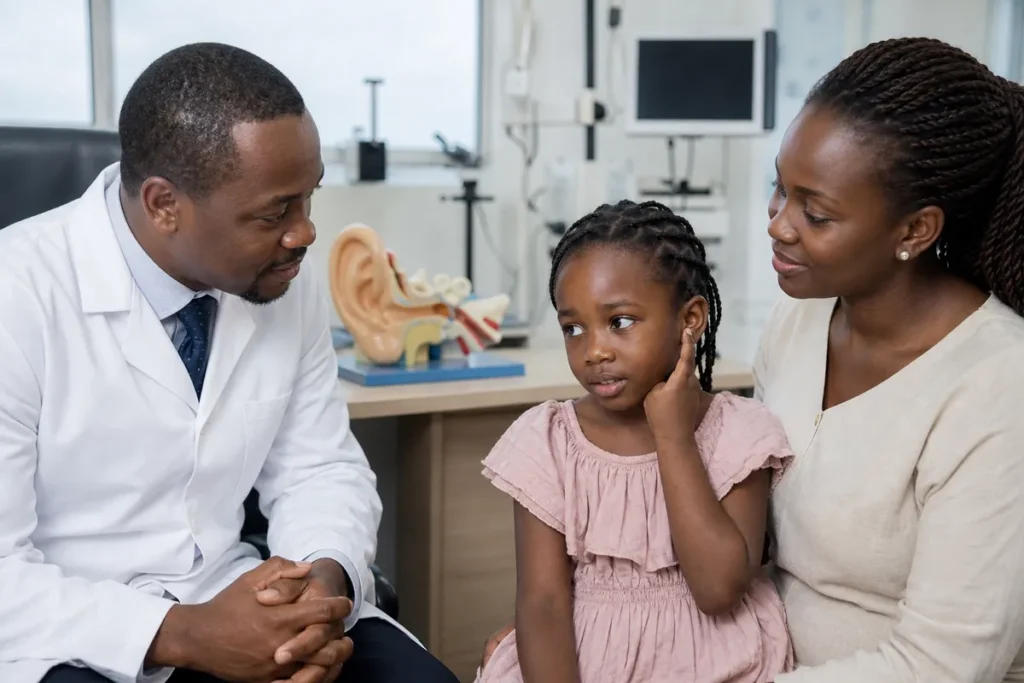
If you are considering otoplasty in Kenya, you are likely searching for trusted information about how ear reshaping or correction is performed, who may benefit, and what you can expect at every stage. Many people in Nairobi and across Kenya seek otoplasty for a variety of reasons: to address prominent or protruding ears, correct congenital differences, or restore symmetry after injury. We offer this specialised face and neck procedure at AJ Plastic Surgery Centre, focusing on individualised care, privacy, and patient safety from first consultation to final follow-up.
Understanding otoplasty in Kenya
Otoplasty, sometimes known as ear pinning or ear reshaping surgery, is a procedure designed to reshape, reposition, or resize the ears. Undergoing otoplasty in Kenya can address concerns such as ears that stick out (prominent ears), unusually large or small ears, or differences in ear shape caused by birth conditions or trauma. The goal is to achieve natural symmetry, which can help people feel more comfortable and confident in their appearance.
In Nairobi, we find that cultural factors, hairstyles, and social perceptions often influence the decision to seek ear surgery. School-aged children and teenagers may feel self-conscious about their ears, while adults working in client-facing professions may want subtle improvements. In some cases, our patients have sustained injuries in road accidents or sports activities (common in urban areas like Nairobi or Mombasa), and choose otoplasty as part of reconstructive care.
We always begin with a thorough consultation to understand each person’s goals and to assess the suitability of ear correction surgery in Kenya for them. While the procedure often addresses cosmetic concerns, it can be equally important for those seeking reconstructive correction after burns, keloid scarring, or other local injuries.
Who can benefit from cosmetic ear correction?
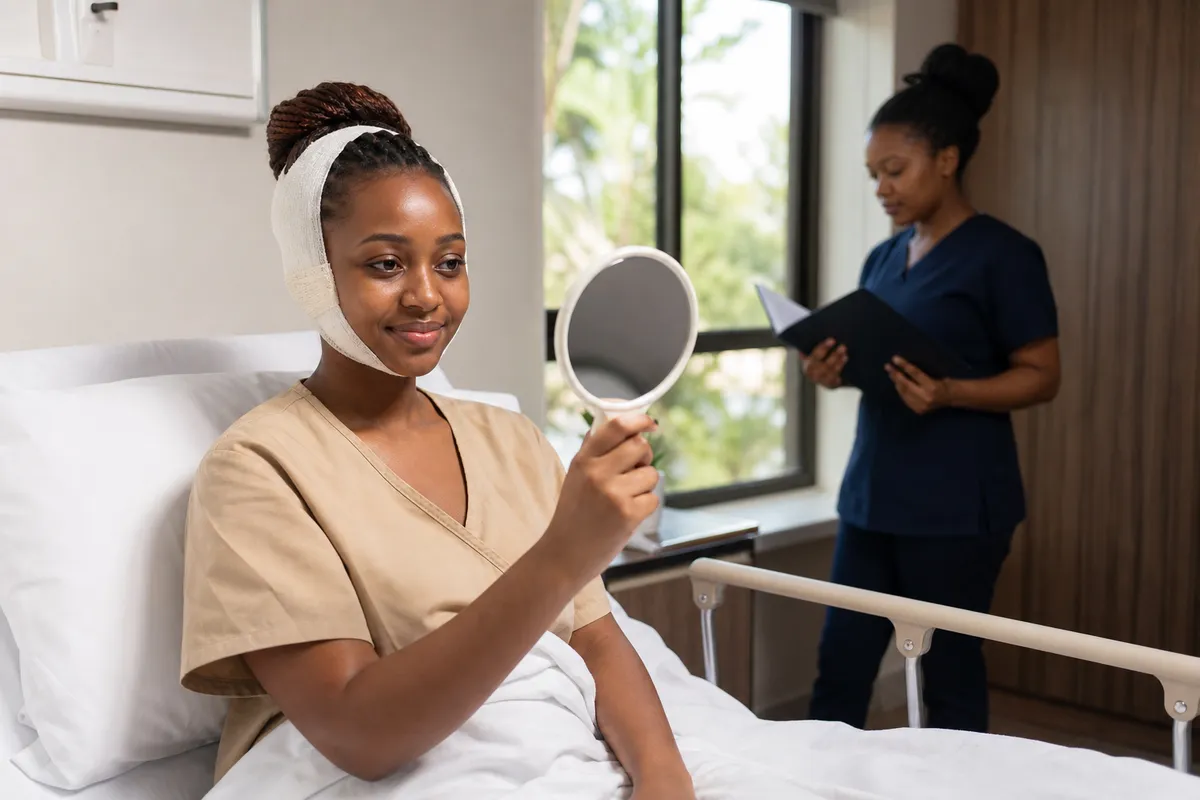
Anyone bothered by the size, shape, or position of their ears may consider ear correction surgery in Kenya. Both children (typically from the age of 5 or 6, once the ear cartilage has stabilised) and adults are eligible, provided they are in good health and have realistic expectations.
Children and teenagers
Children in Kenya sometimes experience teasing or bullying related to prominent ears. We regularly consult with parents who are concerned about their child’s confidence, particularly as children enter primary school. Ear correction in Kenya can be especially effective for younger patients, as the cartilage is softer and easier to shape.
We support parents in discussing the options sensitively and emphasise that children must be willing and able to cooperate with aftercare. The timing and approach are planned to fit each family’s needs and schedule, often coinciding with long school holidays to allow for healing.
Adults
For adults in Nairobi and beyond, common reasons for seeking otoplasty surgery in Kenya include:
- Longstanding discomfort with ear prominence, size, or asymmetry
- Previous failed ear surgery (requiring revision)
- Ear deformity from keloids, burns, or trauma
- Professional considerations (for those in public-facing or modelling careers)
Adults usually have more defined treatment goals and may also seek revision surgery if unhappy with the results of previous procedures. We provide detailed guidance on achievable changes during our consultation.
Special considerations
We recognise that every patient has unique medical and cultural concerns. In our experience, adults considering ear surgery may worry about maintaining privacy, especially if they work in prominent roles. Our team always prioritises patient confidentiality and can plan treatment and follow-up at times that minimise disruption to work and daily life.
If you live outside Nairobi, we also offer guidance tailored to patients travelling for otoplasty in Kenya, including assistance with logistics and follow-up.
What to expect before, during, and after ear surgery
Every otoplasty performed in Kenya with our team is planned and performed with care, safety, and patient understanding as our highest priorities. Here, we explain the process and address practical details relevant to the Kenyan context.
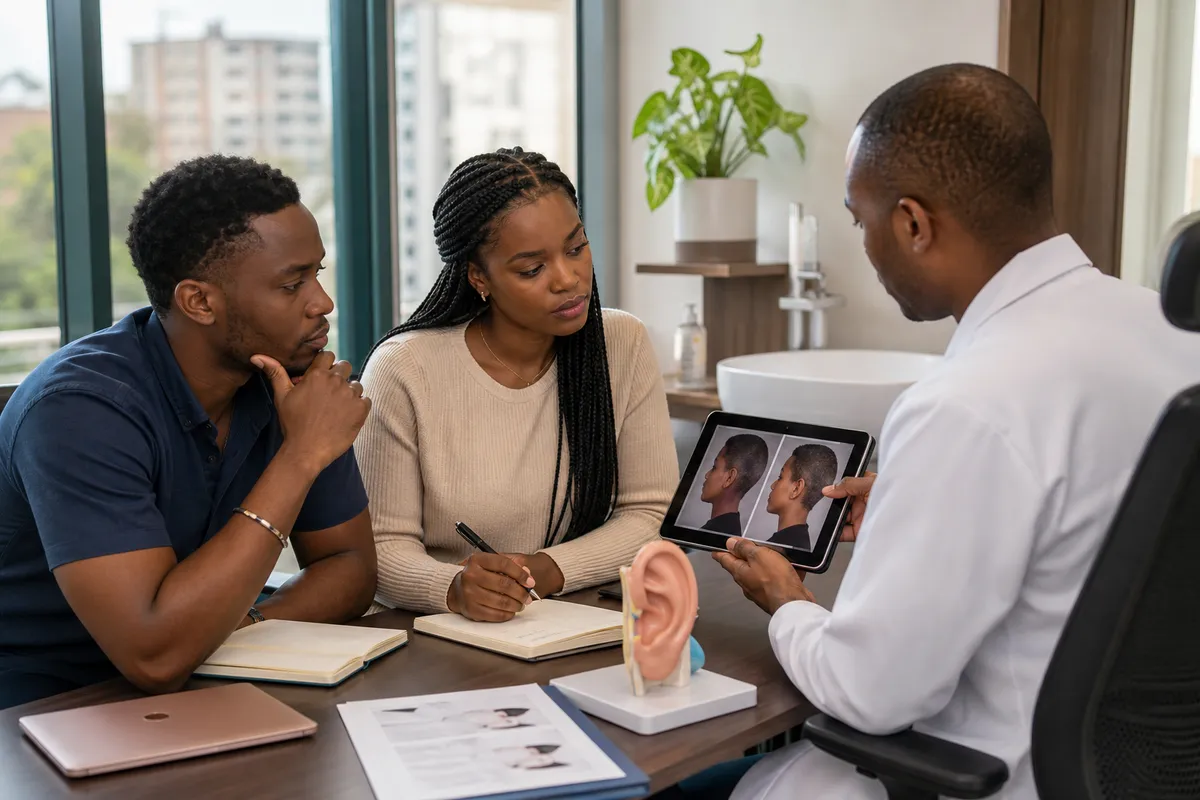
The initial consultation
All patients begin with a comprehensive consultation. During this session, we:
- Listen to your concerns and hopes for ear appearance
- Undertake a full medical and aesthetic assessment, including ear shape, cartilage flexibility, and skin quality
- Discuss your medical history, allergies, and previous procedures
- Review photographs and, where needed, use medical drawing to plan achievable outcomes
We ask about your lifestyle, work, school commitments, and social requirements. For example, Nairobi residents often request minimal downtime due to active work environments, and we propose options to fit life and travel schedules.
During the consultation, we provide detailed explanations of:
- Otoplasty in Kenya: what the procedure involves, step by step
- Potential risks, possible complications, and expected results
- Anaesthesia options (local anaesthetic for adults, or general anaesthesia if preferred or for younger children)
- Practical next steps, including any pre-operative investigations
No procedure is ever recommended without a thorough assessment and clear communication.
Planning and preparation
If you decide to proceed, we schedule the ear procedure in Kenya around your needs. We explain:
- Fasting and medication guidelines if required
- What items to bring for your comfort on the day
- Postoperative care requirements (such as arranging for someone to accompany children or help with transport home)
For patients travelling from Eldoret, Kisumu, or the coast, we help plan appointments to minimise the need for multiple trips. We work with reputable local taxi and accommodation providers in Nairobi to help out-of-town families prepare for surgery.
The procedure itself
Otoplasty in Kenya is usually performed as a day procedure, especially for adults, meaning no overnight hospital stay is typically required. Our surgeons perform the operation using modern techniques tailored to each individual’s anatomy and goals.
Steps may include:
- Gentle marking and planning of the new ear position with you present before anaesthesia
- Creating a carefully placed incision behind the ear, so scars remain discreet
- Reshaping the cartilage and repositioning the ear closer to the head, or making other adjustments as needed
- Securing the changes with internal sutures
- Closing the incisions, then applying special dressings or a supportive headband
The full procedure usually takes 1–2 hours, depending on the complexity and whether both ears are being corrected.
We always use safety-monitored settings, with a trained anaesthetist present. Adults typically have the option of local anaesthesia with sedation, while children usually have a light general anaesthetic to ensure comfort.
Recovery and aftercare
Recovery from ear correction surgery in Kenya is straightforward for most people. Right after surgery:
- Your ears will be bandaged to protect them and maintain the new shape
- Some mild discomfort, swelling, or light bruising is normal and usually resolves after a week
- Most children can return home the same day; adults typically rest for a few hours before going home
You will be given a detailed aftercare plan, which includes:
- Pain management with prescription or over-the-counter medication
- Instructions for keeping the bandages and incisions clean and dry
- Activity guidelines to avoid bumping or disturbing the ears, especially important for active children or people using matatus and other busy public transport in Nairobi
We recommend taking time away from school, public events, or high-contact sports until healing is well underway, usually 1–2 weeks.
Follow-up appointments can be arranged flexibly. For out-of-town patients, we often offer virtual follow-ups (using WhatsApp or Zoom) to check healing and answer questions. Many of our patients find this blend of in-person and virtual support helpful, especially when balancing travel costs.
Long-term outcomes
Within 2–3 weeks, bandages are removed and swelling subsides. The new ear shape will be apparent soon after, with final results becoming clear in a few months as healing continues.
Scars are hidden behind the ear and fade over time. We provide guidance on scar care and can advise on options such as silicone gel sheets or ointments available locally at major pharmacies like Goodlife or Haltons.
Our team remains available to address any concerns or questions during recovery and beyond. The changes from otoplasty in Kenya are intended to be permanent.
Frequently asked questions about ear reshaping in Nairobi
Q: What is the cost of otoplasty in Kenya, especially in Nairobi? Costs vary depending on the complexity and whether both ears are treated. While every case is unique, prices in Nairobi at private centres typically range from KES 120,000 to KES 250,000. We provide a detailed, personalised quote during your consultation.
Q: Is otoplasty in Kenya covered by health insurance? Most health insurance providers in Kenya, including NHIF and major private insurers, do not cover cosmetic procedures. However, if otoplasty is required for reconstructive reasons (such as following burns or injury), partial reimbursement may be possible, depending on your policy. We can help you prepare the required medical reports for insurance claims if eligible.
Q: Are there risks involved with otoplasty in Kenya? All surgical procedures carry risks. With ear surgery in Kenya, specific risks include infection, bleeding, unfavourable scarring, asymmetry, or recurrence of prominence. Our approach involves a detailed discussion of risks during your consultation, clear aftercare instructions, and close follow-up to minimise complications.
Q: How long do results from otoplasty in Kenya last? Otoplasty in Kenya provides permanent changes. Once the cartilage has been shaped and healed, the ear maintains its new position and shape for life. Further adjustments are rarely needed unless there is significant trauma or injury later on.
Q: What age is best for ear reshaping surgery? Ear growth is nearly complete by age 5 or 6, making otoplasty possible for children from this age. Early correction can help prevent teasing. Adults of any age can also achieve good results. Suitability is determined individually during consultation.
Planning your otoplasty consultation with us
From the first enquiry to final follow-up, our team supports you at every step of otoplasty in in Kenya. We prioritise privacy and clear communication, ensuring all questions are answered before any decision is made.
We welcome patients from Nairobi, Mombasa, Eldoret, Kisumu, and beyond. For those traveling from other counties or from outside Kenya, we offer practical guidance on timing, local accommodation, and remote aftercare options.
Our process is always centred on your safety and individual needs. We never recommend a procedure unless it is suitable for you, and we give honest guidance about expected outcomes and recovery.
If you are considering ear reshaping or correction for yourself or your child, book a consultation with our team to discuss your concerns and options. We are here to provide clarity, reassurance, and expert care, guiding you through every part of your otoplasty journey.
For further information on otoplasty, you can also read more on Wikipedia’s otoplasty article.
Costs vary depending on the complexity and whether both ears are treated. While every case is unique, prices in Nairobi at private centres typically range from KES 120,000 to KES 250,000. We provide a detailed, personalised quote during your consultation.
Most health insurance providers in Kenya, including NHIF and major private insurers, do not cover cosmetic procedures. However, if otoplasty is required for reconstructive reasons (such as following burns or injury), partial reimbursement may be possible, depending on your policy. We can help you prepare the required medical reports for insurance claims if eligible.
All surgical procedures carry risks. With otoplasty in in Kenya, specific risks include infection, bleeding, unfavourable scarring, asymmetry, or recurrence of prominence. Our approach involves a detailed discussion of risks during your consultation, clear aftercare instructions, and close follow-up to minimise complications.
Otoplasty in in Kenya provides permanent changes. Once the cartilage has been shaped and healed, the ear maintains its new position and shape for life. Further adjustments are rarely needed unless there is significant trauma or injury later on.
Ear growth is nearly complete by age 5 or 6, making otoplasty possible for children from this age. Early correction can help prevent teasing. Adults of any age can also achieve good results. Suitability is determined individually during consultation.