
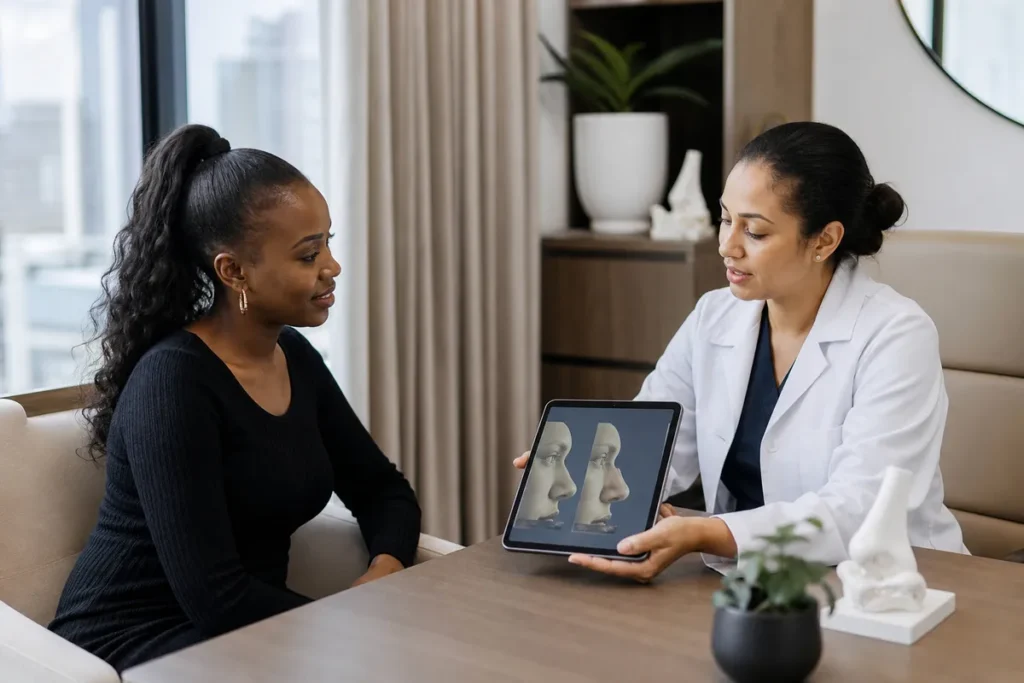
If you have undergone nose surgery and still feel unsatisfied with your appearance or experience functional concerns, you may be considering revision rhinoplasty in Kenya. Revision, or secondary, rhinoplasty can address complications, refine cosmetic outcomes, or restore proper breathing after a previous procedure.
Starting this journey can feel daunting, especially when expectations were not met the first time. Our team at AJ Plastic Surgery Centre understands how important it is for you to feel informed, supported, and safe as you explore your options.
In this guide, we explain what revision rhinoplasty in Kenya involves, why individuals might seek corrective nose surgery, and how we prioritise patient safety and personalised planning every step of the way. Whether your goals are aesthetic, functional, or both, we aim to provide transparent, practical information to help you make confident decisions.
Understanding revision rhinoplasty in Kenya
Revision rhinoplasty in Kenya refers to a secondary nasal surgery performed to correct or improve the results of a previous rhinoplasty. This procedure is typically sought by individuals who remain unsatisfied with their initial outcomes, experience new or ongoing breathing difficulties, or develop structural issues after healing.
A revision rhinoplasty is generally more complex than a primary procedure. The tissue may have developed scar tissue, the anatomy could be altered, and expectations are often high. Patients considering revision rhinoplasty in Kenya require careful evaluation and a realistic discussion about what is achievable and appropriate for their unique circumstances.
We begin with a comprehensive consultation focused on understanding your concerns, past surgical history, and specific goals. This allows our surgeons to assess the internal and external structure of your nose, identify potential challenges, and plan the safest, most suitable approach for you. In all cases, revision rhinoplasty in Kenya is tailored to each person’s needs and anatomy, never a one-size-fits-all solution.
Reasons for nose revision surgery and who may benefit
Many people seek revision rhinoplasty in Kenya for a variety of reasons. The most common include dissatisfaction with the appearance of the nose after the initial surgery or complications that affect comfort or function.
Some patients find that the shape or symmetry of their nose is not what they hoped for after the first operation. Bumps, irregularities, or unwanted changes in size may become apparent once swelling has reduced.
Others develop new breathing problems, such as nasal obstruction or collapse. In rare cases, trauma, infection, or scarring can change the surgical outcome over time.
If you feel disappointed, self-conscious, or physically hindered after prior rhinoplasty, you are not alone. Revision rhinoplasty in Kenya may be appropriate for individuals who:
- Experience breathing difficulties related to their previous nose surgery.
- Wish to correct asymmetry, visible deformities, or unsatisfactory reshaping.
- Have developed structural issues, such as a collapsed nasal bridge or tip.
- Suffer from persistent discomfort, scarring, or irregular healing.
- Desire a more natural, harmonious nose shape that suits their facial features.
It is essential to consider timing, as the nose needs time to heal fully after the original surgery. We usually recommend waiting at least 12 months before pursuing revision rhinoplasty in Kenya to allow swelling to subside and scar tissue to soften.
Before recommending any secondary procedure, we assess whether revision is appropriate and whether your goals are safe and achievable. Honest communication about what can be improved, the risks involved, and recovery expectations is a key part of our process.
Our approach to secondary rhinoplasty: Safety, assessment, and support
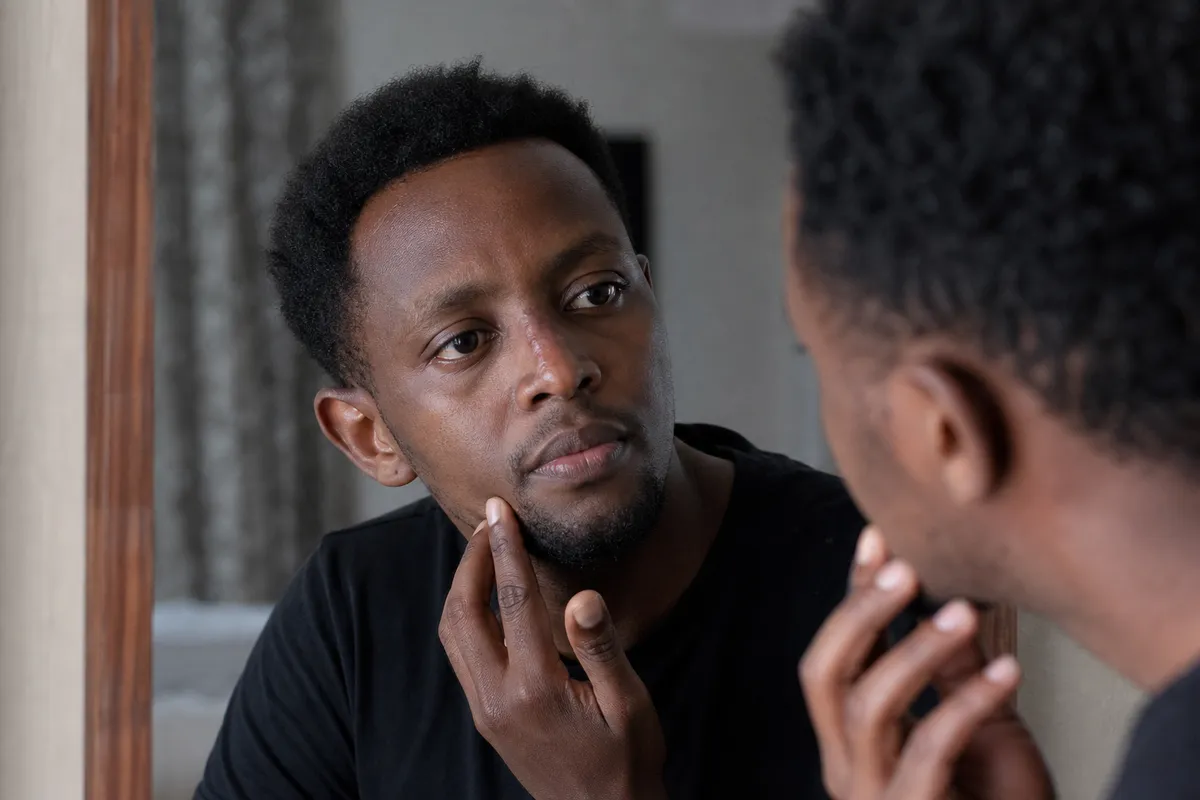
Our experience with revision rhinoplasty in Kenya underscores the importance of a tailored, patient-focused approach. As each case is unique, we take extra steps to ensure your goals are understood and your wellbeing remains our top priority throughout.
Every patient begins their journey with us through an in-depth plastic surgery consultation. During this meeting, we listen closely to your concerns and motivations regarding revision rhinoplasty in Kenya. We review your previous surgical history, examine your current nasal structure, and discuss any breathing or aesthetic issues you are experiencing.
We recognise that past surgical experiences can influence your feelings about future procedures. Our priority is to create a supportive and respectful environment where privacy is maintained and all your questions are addressed openly.
Once we understand your needs, our surgeons explain the available surgical options, potential risks, anticipated recovery, and likely results. Revision rhinoplasty in Kenya is often more technically demanding and unpredictable than primary procedures, so we place extra emphasis on honest, transparent advice. We let you know what is possible and what may not be feasible, setting realistic expectations from the outset.
Patient safety is at the heart of our planning. We consider your full medical history, any previous complications, and the health of your nasal structures before proceeding. If revision rhinoplasty in Kenya is not advisable, we will always explain our reasoning and recommend safer alternatives or non-surgical options when appropriate.
Should you choose to proceed, our team guides you through every stage: from pre-operative preparation to hospital admission, through surgery, and into the recovery period. We offer clear written and verbal instructions for aftercare and arrange regular follow-up visits. Any concerns, questions, or unexpected symptoms after surgery are addressed promptly and with compassion.
For patients traveling from outside Nairobi or other parts of Kenya, we provide special guidance and support for your travel and recovery needs, ensuring you receive attentive care wherever you are based.
Throughout, our guiding principles remain the same: detailed individual assessment, honest communication, privacy, and safety-first planning tailored to your unique situation.
What to expect: The revision rhinoplasty process in Kenya
If you are considering revision rhinoplasty in Kenya, knowing what to expect can help reduce anxiety and prepare you for each stage of the journey.
Initial consultation Your first step is a one-on-one consultation with our team. We review your medical and surgical history, assess your nasal anatomy, and discuss your personal goals. Photographs are usually taken for reference. If you have records or information about your previous surgery, bringing these can be helpful.
Assessment and planning We develop a customised surgical plan that addresses both cosmetic and functional concerns. Our surgeons will carefully examine any changes from the initial procedure, scar tissue, and internal structures. Sometimes, advanced imaging or breathing assessments are recommended.
Timing of surgery We advise that revision rhinoplasty in Kenya is best scheduled at least one year after your last operation. This waiting period is important for minimising risks and achieving the most accurate, stable result.
Operative approach Revision procedures may require different surgical techniques than your previous operation, depending on your needs. Some cases can be managed with less invasive adjustments, while others need more extensive restructuring using your own tissue or grafts.
Recovery Recovery from revision rhinoplasty in Kenya often takes longer due to scar tissue and tissue changes from the previous surgery. Swelling can persist for several months, and final results may take up to a year to fully settle. We provide detailed aftercare instructions to promote healing and minimise complications.
Risks and realistic expectations
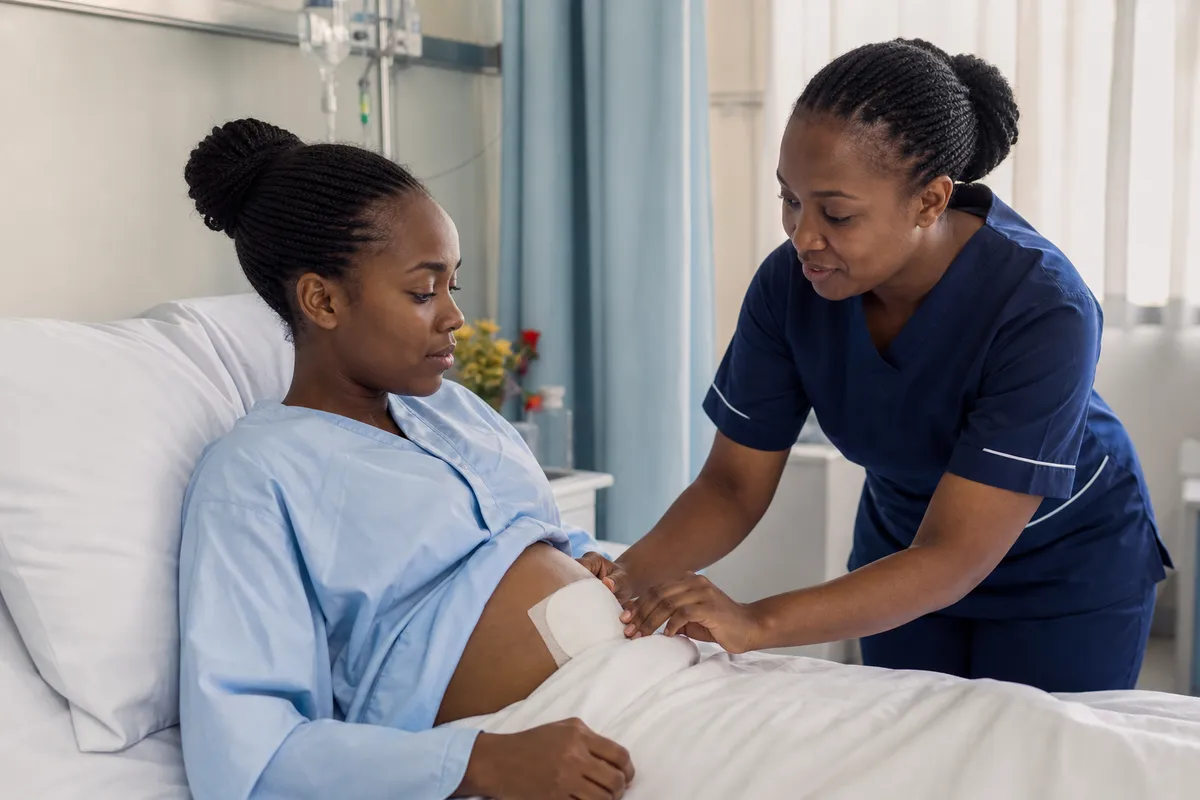
Revision rhinoplasty in Kenya, like all surgical procedures, carries risks. These include infection, bleeding, scarring, prolonged swelling, numbness, or persistent irregularities. Because tissues have already been operated on, the risks of altered sensation, incomplete correction, or new breathing difficulties are higher than with primary surgery.
In our experience, the key to a positive outcome is clear communication and maintaining realistic expectations. Not all concerns can be fully corrected with revision rhinoplasty in Kenya, but meaningful improvement is often possible when surgical planning is guided by safety, honesty, and experience.
We never promise “perfect” results or guarantee a specific outcome. Instead, we aim for a more natural, balanced, and functional nose that helps you feel confident and breathe comfortably.
How to choose your revision rhinoplasty provider
Selecting a qualified, experienced provider is critical when considering revision rhinoplasty in Kenya. This procedure demands advanced surgical skill, an in-depth understanding of nasal anatomy, and a commitment to patient-centred care.
We recommend looking for the following qualities in your consultation:
- A clear, honest explanation of risks, results, and limitations.
- Thorough assessment of your medical history and previous surgeries.
- Transparent discussion of costs, recovery time, and follow-up care.
- Strong focus on patient safety, privacy, and support before, during, and after treatment.
You may also find it helpful to review NHS information on rhinoplasty for additional perspective on potential benefits and limitations.
At our centre, we approach every revision rhinoplasty in Kenya with the utmost diligence, transparency, and patient empowerment.
We recommend waiting at least 12 months after your initial surgery before considering revision rhinoplasty in Kenya. This allows swelling and scar tissue to settle, making further assessment and planning safer and more predictable.
While revision rhinoplasty in Kenya can address many aesthetic and functional concerns, not all issues can be fully resolved. We focus on honest guidance about what is realistically achievable in your specific case.