
Ear reshaping surgery in Kenya, also known medically as otoplasty or pinnaplasty, is designed to address concerns such as prominent, misshapen, or asymmetric ears for children, teens, and adults. At AJ Plastic Surgery Centre, our team understands that these concerns are often both physical and emotional. We focus on providing expert surgical care that places patient safety, privacy, and clear communication at the heart of every decision.
Many people consider having their ears reshaped for a range of reasons: from prominent ears that attract unwanted attention to correcting injuries, congenital defects, or dissatisfaction with previous results. Our approach always begins with a consultation dedicated to understanding your needs, exploring your options, and providing honest, personalised guidance. Below, we answer the most frequent questions about ear reshaping surgery in Kenya to help you make informed choices for yourself or your child.
Ear reshaping surgery in Kenya – common questions
Ear reshaping procedures in Kenya have become more accessible to those seeking to correct prominent, protruding, or irregularly shaped ears. Many patients contact us with similar concerns, wanting to know what the procedure involves, why it is chosen, and what kinds of changes are possible.
What is ear reshaping surgery? The procedure, often called otoplasty (or pinnaplasty when referring to pinning the ears closer to the head), modifies the shape, position, or proportions of the ears. This surgery can address ears that stick out, are misshapen due to birth defects or injury, or require revision after earlier procedures. In our experience, even mild changes can result in a significant improvement in facial harmony and self-confidence.
Why do people seek to reshape their ears in Kenya? Children or adults may feel self-conscious about prominent or unusually shaped ears. In Kenya, cultural norms and school environments can make visible differences a source of teasing or discomfort, especially for young patients. Others have medical reasons, such as damage from injury, birth conditions, or dissatisfaction with previous surgical results. By offering an individualised assessment, we aim to understand your specific motivation in detail.
Are there age restrictions or ideal times for the procedure? We typically recommend ear reshaping after the age of five or six, when the ear cartilage has reached near-adult size and shape. Early intervention is often preferred for children to minimise psychological distress. Adults of any age with healthy expectations may also be suitable. As with all surgical plans, individual assessment is essential.
What changes are possible? The most common aims are to reduce ear prominence (bring the ears closer to the head), reshape the ear folds, or correct irregularities caused by injury or birth differences. We tailor each plan, explaining the achievable outcomes based on your unique ear anatomy.
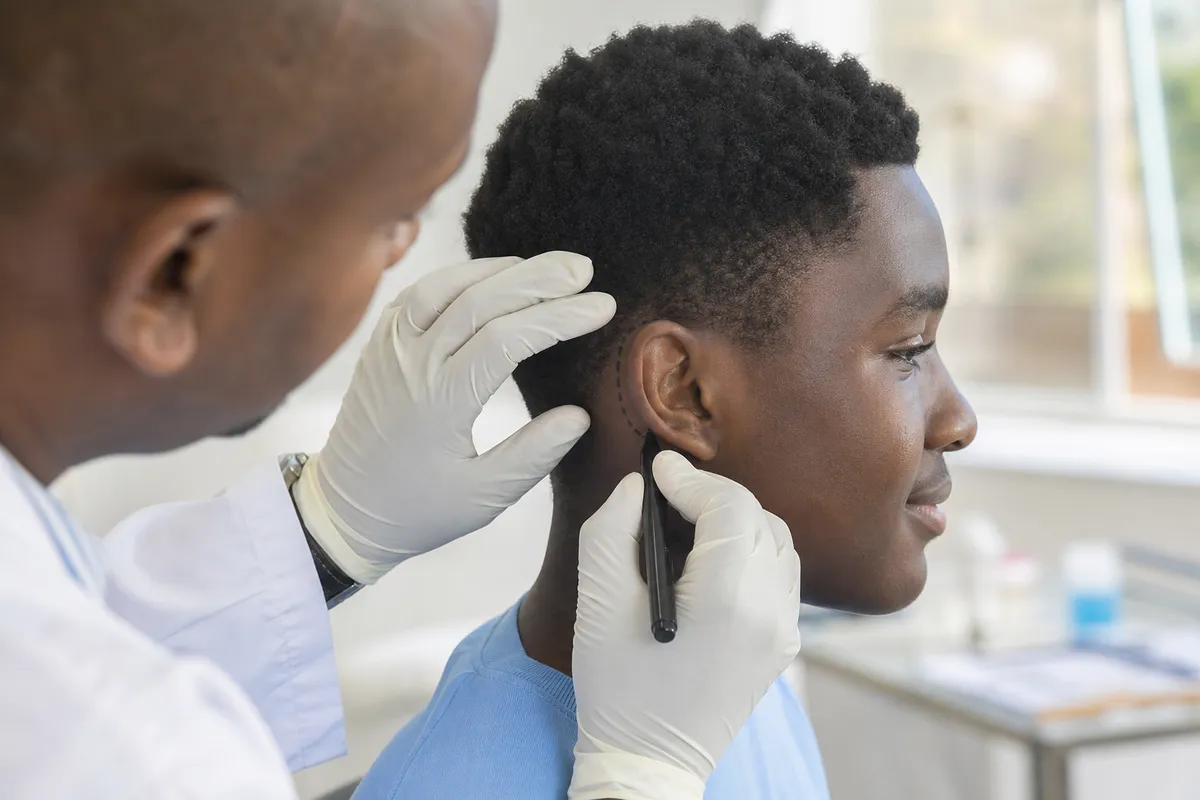
Will scars be visible? In most cases, incisions are hidden in the natural folds behind the ear, making scars difficult to detect after healing. We discuss scar care and realistic expectations as part of every consultation.
Understanding your preferences and concerns allows us to tailor our approach to your needs. Our honest communication ensures you know what is possible, safe, and suitable in your case.
What to expect during and after otoplasty (ear pinning surgery)
Understanding the process of ear reshaping surgery in Kenya is vital to feeling confident and informed in your decision. We guide patients through every stage, from initial consultation to full recovery, with safety and privacy as our top priorities.
Comprehensive consultation and preparation
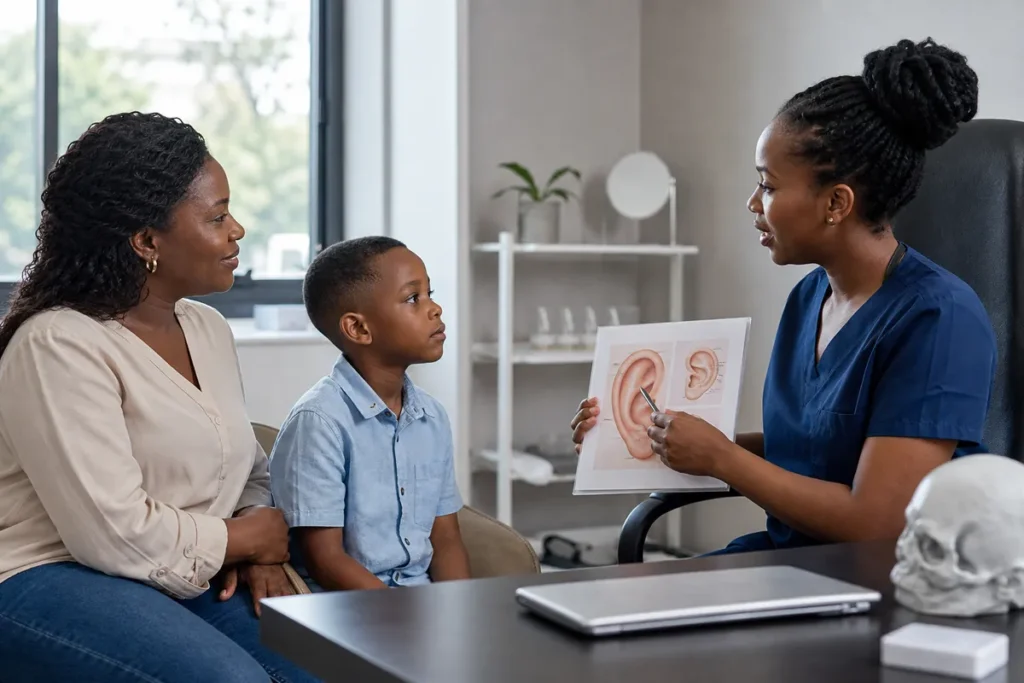
Every journey begins with a detailed consultation. We review your medical history, discuss medications, allergies, and previous operations, and explore your reasons for considering ear reshaping in Kenya. We also assess ear anatomy, proportions, and symmetry.
During this appointment, we explain all available options, risks, and limitations. For younger patients, we encourage both the child and their guardians to participate, ensuring everyone understands the process and realistic expectations.
If you are travelling from outside Nairobi, we can provide guidance regarding pre-surgical investigations or any requirements for out-of-town patients, helping you plan your visit smoothly.
Surgical procedure: What happens on the day?
On the day of surgery, you will meet with our team to review the surgical plan and address any final questions. Ear reshaping procedures in Kenya are usually performed as outpatient procedures, which means you can return home the same day unless there are specific medical reasons for an overnight stay.
For children, surgery is often performed under general anaesthesia. For adults, local anaesthesia with or without sedation is usually sufficient. The duration of the procedure varies depending on complexity but typically lasts 1–2 hours.
Our surgeons carefully make an incision behind the ear, allowing access to the cartilage. The cartilage is sculpted and repositioned as needed, sometimes with the use of permanent internal sutures to hold the new shape. In some cases, cartilage may be removed or reshaped to create a natural contour.
Once the desired result is achieved, the incision is closed with fine sutures. We then apply a protective dressing or bandage to support the new ear position and reduce swelling.
Recovering from ear reshaping surgery in Kenya
After your ear reshaping surgery in Kenya, you can expect some swelling, bruising, and mild discomfort, which usually settles within the first week. We provide a thorough aftercare plan, including pain management, wound care instructions, and guidelines for activities during recovery.
Most adults and older children return to normal activities within one to two weeks. Children may require an extra week off from school, especially to avoid contact sports or activities that could impact healing. We advise wearing a soft headband at night for several weeks to protect the ears as they heal.
We schedule regular follow-up appointments to monitor your progress and answer any questions as you recover. Transparent communication ensures you understand every aspect of the recovery process and know when to seek our guidance if any unusual symptoms appear.
Protecting your privacy and safety
Our commitment to privacy means all consultations and procedures are conducted confidentially. We understand that ear reshaping surgery in Kenya is often a sensitive decision, and our environment is designed to make you feel safe and respected throughout your experience.
Patient safety is our highest priority. All surgeries are planned around your individual health status and needs.
We discuss anaesthesia options, surgical risks, possible complications, and the steps we take to minimise them. Every concern is addressed openly, empowering you to make choices with confidence.
Understanding suitability, safety, and consultation for pinnaplasty

Ear reshaping surgery in Kenya is not suitable for everyone, which is why we emphasise thorough, honest assessment before making any recommendations.
Who is a suitable candidate for ear reshaping surgery in Kenya?
You may be a suitable candidate if your ears stick out significantly, you have concerns about the shape or size of your ears, or you are bothered by injury-related changes. Children are usually considered once the ear cartilage has matured, typically from age five or six.
Adults seeking correction, whether for the first time or as a revision of an earlier procedure, are assessed individually. We look for good overall health, stable ear shape, realistic expectations, and motivation for surgery.
We always start with a clear conversation about your goals, concerns, and medical background. This helps us recommend only the most appropriate treatment options.
The importance of individual assessment and safety
Safety is the cornerstone of our approach to ear reshaping surgery in Kenya. During your consultation, we assess factors such as medical history, healing capacity, presence of any untreated ear conditions, and previous surgical outcomes.
We also consider psychological factors, such as personal motivation, understanding of risks and benefits, and the support system at home, especially for younger patients.
All treatment options, potential risks, alternative treatments, and expected outcomes are discussed at length before you proceed. A treatment plan is developed only after ensuring you are fully informed and comfortable.
How we plan and support your treatment journey
Our experienced team will provide clear explanations of the surgical process, the likely length of recovery, risks such as infection or asymmetry, and measures we take to prevent complications. We also discuss preparation for the day of surgery, such as avoiding certain medications or making practical arrangements for school or work leave.
For patients travelling from outside Nairobi, we provide specific guidance on transportation, postoperative accommodation if needed, and coordination of follow-up care. Our support does not end after your surgery: we remain available for advice, reassurance, and any additional treatment if necessary.
Honest communication and realistic expectations
Our goal is to provide you with all the information you need to make a confident, informed decision about ear reshaping surgery in Kenya. We never push for unnecessary procedures or exaggerate outcomes. Instead, we work alongside you to develop achievable goals tailored to your needs.
If you decide that surgery is not right for you, we respect your decision and can offer alternative aesthetic advice, including minimally invasive treatments when appropriate.
By prioritising individual assessment and open conversation, we help ensure your experience is positive and empowering from the first visit onwards.
The procedure usually takes one to two hours, depending on complexity. Most patients can go home the same day.
Discomfort is usually mild. We use pain relief and thorough aftercare instructions to keep recovery as comfortable as possible.
Scars are typically hidden behind the ear fold and fade over time. We provide advice to support proper healing and reduce scar appearance.
Most ear reshaping surgery in Kenya is done as a day case, with no overnight hospital stay required unless medically necessary.
Usually within one to two weeks, but it varies by child and the specific procedure performed. We provide clear recommendations tailored to each child’s needs.